

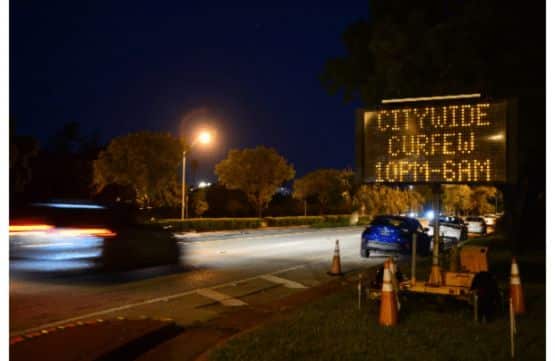
Charged with Violating LA Curfew Orders? What a Criminal Defense Attorney Los Angeles Can Do for You
Curfew violations in Los Angeles carry real consequences, including fines and potential jail time, even if you weren’t aware of the order or qualified for an exemption. A criminal defense attorney Los Angeles can challenge these charges by questioning the lawfulness of the curfew order, proving exemptions apply, or demonstrating lack of proper notice. As a matter of fact, many curfew violation charges have valid defenses that prosecutors must overcome to secure a conviction. This article explains the charges you face, what prosecutors must prove, and how legal representation protects your rights and builds a strong defense strategy.
Understanding LA Curfew Violation Charges Under LACC 2.68.320
Los Angeles County Code Section 2.68 grants local authorities sweeping powers to impose emergency curfews when public safety demands immediate action. Under LACC 2.68.320, violating these orders constitutes a misdemeanor offense. The legal framework relies on Government Code Section 8634, which empowers the Board of Supervisors and delegated officials to promulgate orders necessary for protecting life or property.
What the Law Says About Emergency Curfew Orders
LACC 2.68.320 establishes that any person who violates a curfew established by lawful rule, regulation, order, or directive commits a misdemeanor. The statute grants local officials broad discretion to enforce these restrictions during times of crisis. Curfew orders typically prohibit individuals from being present on public streets, avenues, boulevards, parks, alleys, or any public areas during specified hours.
These restrictions only apply to public property. You can remain on private property, including your yard, porch, or driveway, without violating the order. However, a direct command from law enforcement during curfew hours supersedes this distinction. If an officer orders you to get inside, even on your own property, you must comply or face charges.
The Chair of the Board of Supervisors holds authority under LACC section 2.68.150 to issue emergency orders for protecting life and property where necessary to preserve public order and safety. By law, authorities must clearly communicate curfew orders to the public through official announcements, press releases, or mobile alerts.
When Curfews Are Typically Imposed in Los Angeles
Emergency curfew orders address immediate threats stemming from natural disasters, public health crises, or ongoing civil disturbances. Los Angeles has a history of implementing these measures during critical situations.
In 1992, the city imposed a dusk-to-dawn curfew when riots erupted after LAPD officers responsible for beating Rodney King were acquitted. More recently, protests over George Floyd’s death in 2020 turned violent, prompting Mayor Eric Garcetti to announce a curfew for Downtown Los Angeles that eventually expanded citywide. During those protests, 2,700 people were arrested, with 2,500 of those arrests specifically for curfew violations or failure to disperse.
In June 2025, Mayor Karen Bass imposed a curfew in downtown Los Angeles starting at 8 p.m. and lifting at 6 a.m. in response to protests sparked by immigration raids. The protests had entered their fifth night, with demonstrators attempting to cross U.S. 101 and causing significant damage to downtown buildings through graffiti and broken windows. Arrests increased throughout the week: 27 on Saturday, 40 on Sunday, 114 on Monday, and nearly 200 detained on Tuesday before evening protests began.
Wildfires also trigger curfew orders. County officials instituted a 6 p.m. to 6 a.m. curfew in areas where mandatory evacuation orders were in effect during catastrophic wildfires that destroyed thousands of homes in January.
Penalties You Face: Fines and Jail Time
A conviction under LACC 2.68.320 carries substantial penalties. You face a fine not exceeding $1,000 or imprisonment for up to six months, or both. Courts may also impose informal summary probation for three years.
These penalties apply whether you knowingly violated the curfew or simply weren’t aware an order was in effect. The misdemeanor conviction creates a criminal record that can affect future employment and housing opportunities. Specifically, prosecutors will pursue charges if you were present in restricted areas during curfew hours without qualifying for an exemption. A criminal defense attorney Los Angeles becomes necessary to challenge the charges and protect your record from the lasting impact of a conviction.
What Prosecutors Must Prove to Convict You
Prosecutors carry the burden of proving specific elements beyond a reasonable doubt before securing a curfew violation conviction. The state cannot simply demonstrate you were outside during restricted hours. Specifically, three distinct components must be established, and weakness in any single element creates grounds for dismissal.
A Lawful Curfew Order Was in Effect
The prosecution must establish that a valid curfew order existed at the time of your alleged violation. The curfew must have been established according to state and local emergency protocols. Arbitrary or discriminatory applications fail this test.
A lawful order requires proper authorization from designated officials. In Los Angeles, the Mayor holds authority to issue emergency curfews under City Charter provisions and Administrative Code Chapter 3, Section 8.29. County curfews require action from the Board of Supervisors or the Chair acting under delegated emergency powers.
The order cannot be discriminatory in application. If enforcement targets specific neighborhoods or demographic groups without justification tied to the emergency itself, the order’s validity becomes questionable. Your criminal defense attorney Los Angeles can challenge whether the curfew was properly enacted and whether it meets constitutional standards for emergency restrictions.
You Were Under the Jurisdiction of the Curfew
The curfew must apply to the specific location where you were present during the restricted hours. Geographic boundaries matter. If the order covered downtown Los Angeles but you were in the San Fernando Valley, jurisdiction fails.
Curfew orders typically specify exact boundaries and affected areas. For instance, some emergency orders restrict only particular zones while leaving other parts of the city unrestricted. The prosecution must prove you were physically present within the designated curfew zone during enforcement hours.
You Knowingly Violated the Curfew
Prosecutors must demonstrate you were aware of the curfew and intentionally failed to comply. This element requires proof of knowledge. If you were unaware of the curfew or received misinformation about its scope, this impacts the prosecution’s case.
Before taking enforcement action, law enforcement officers must ask your age and reason for being present in a public place during curfew hours. The officer cannot issue a citation or make an arrest unless they reasonably believe a violation occurred and that no exemption applies based on your responses.
This procedural requirement protects individuals who qualify for exemptions. Essentially, officers must conduct an investigation before enforcement rather than making automatic arrests.
Why Each Element Matters for Your Defense
Each element creates a specific defense opportunity. If the curfew order was improperly enacted, all charges fail regardless of your actions. If you were outside the jurisdiction, location alone defeats the charge. If you lacked knowledge or qualified for an exemption, the knowing violation element collapses.
The prosecution must prove all three elements simultaneously. Weakness in any single component provides grounds for dismissal. Your attorney examines how officers determined a violation occurred, whether proper procedures were followed, and whether the order itself was constitutionally sound. This multi-layered burden creates multiple points where challenges can succeed.
How a Criminal Defense Attorney Challenges Curfew Violation Charges
Skilled legal representation attacks curfew charges through multiple defense strategies that target weaknesses in the prosecution’s case. Your criminal defense attorney Los Angeles examines constitutional grounds, procedural errors, and factual disputes to build arguments for dismissal or acquittal.
Arguing the Curfew Order Was Unlawful
Attorneys challenge the constitutional validity of curfew orders themselves. Courts require these restrictions to be narrowly tailored and content-neutral, serving a substantial governmental interest without unreasonably limiting alternative avenues of communication. Overbroad orders that extend restrictions to areas not at risk of extreme peril face successful litigation.
The order must promote a government interest that would be achieved less effectively without the regulation. If alternative measures less restrictive than a curfew exist, those alternatives should have been evaluated first. Sweeping bans that fail to respond to the specific nature, time, or location of unrest draw constitutional challenges.
Curfew orders often have an incidental impact on First Amendment rights to free speech, religion, and assembly. Similarly, critics argue these measures violate Fourth Amendment protections against unreasonable searches and seizures, Fifth Amendment due process rights, and Fourteenth Amendment equal protection guarantees.
Proving You Qualified for an Exemption
Most curfew orders include specific exemptions. Your attorney can demonstrate you were traveling to or from work or school, seeking medical treatment, experiencing homelessness without shelter access, or responding to family emergencies. Courts have ruled that curfew laws must include exceptions for individuals engaged in First Amendment-protected activities, including religious activities and protests.
Demonstrating Lack of Proper Notice or Awareness
In California, curfews must be in writing and given widespread publicity and notice. Notice constitutes an element of due process under the Fifth and Fourteenth Amendments. If the curfew order failed to provide adequate public notice of prohibited conduct, courts may find it invalid.
Your attorney can present evidence showing lack of public announcements or confusion about the curfew’s start time to argue you were unaware of the restriction. Even when a curfew order is appropriately tailored, inadequate notice creates grounds for challenging enforcement.
Establishing Mistaken Identity
Protest situations create chaotic enforcement conditions where individuals are arrested for being in the wrong place at the wrong time. Mistaken identifications account for over 75% of wrongful convictions overturned through DNA testing. Your attorney can present alibis or witness statements demonstrating you were not the person who violated the curfew.
Challenging Evidence and Police Procedures
Attorneys scrutinize whether law enforcement followed proper procedures during your detention. Under Terry v. Ohio standards, officers must have reasonable, articulable suspicion before detaining anyone. A motion to suppress can exclude evidence gathered from an unlawful stop. If the stop was improper, the entire case collapses.
Valid Exemptions Your Attorney Can Use in Your Defense
Most curfew orders contain statutory exemptions that permit specific activities during restricted hours. Your criminal defense attorney Los Angeles can assert these defenses based on documented circumstances at the time of your alleged violation.
Traveling to or from Work or School
Employment-related travel constitutes a recognized exemption under most curfew orders. Individuals traveling to and from their place of employment remain exempt from curfew restrictions. Limited exceptions apply for people traveling to and from work, alongside law enforcement, emergency personnel, and credentialed media representatives.
Los Angeles Municipal Code Section 45.03 explicitly lists exemptions for minors traveling to or from work, responding to family emergencies, or participating in school-sanctioned activities. If your child was returning from a restaurant shift, employment records can defeat the time-based element of the allegation. Your attorney presents pay stubs, work schedules, or employer statements verifying you were commuting during the restricted hours.
School-related travel receives similar protection. Minors going to, attending, or coming home from supervised school activities qualify for exemptions. This extends to religious or civic-sponsored events where institutions take responsibility for participants.
Seeking Medical Attention or Emergency Care
Emergency medical situations override curfew restrictions. Individuals seeking emergency care receive explicit exemptions under curfew orders. This protection extends to emergency health care providers and emergency medical personnel who must travel during restricted hours to provide services.
Your attorney can present hospital records, ambulance call logs, or medical documentation showing you were traveling for urgent care. The exemption applies whether you were the patient or transporting someone requiring immediate medical attention.
Experiencing Homelessness Without Shelter
Individuals experiencing homelessness who are sheltering in place qualify for exemptions under most curfew orders. However, enforcement creates significant challenges for this population. Advocates questioned whether police take necessary time to question and verify housing status before making arrests or using aggressive tactics to clear streets.
The Legal Aid Society and Coalition for Homeless Youth created fliers for unsheltered people to carry, explaining exemptions and their rights. Some individuals used these fliers as certification of homelessness when approached by police. Your attorney can argue you qualified for this exemption if you lacked shelter access during curfew hours.
Responding to Family Emergencies
Family emergencies provide grounds for exemption. Los Angeles Municipal Code Section 45.03 explicitly includes responding to family emergencies among protected activities. Emergency situations involving immediate family members create valid defenses to curfew charges.
Your attorney documents the emergency through medical records, police reports, or witness statements establishing the urgent nature of your travel during restricted hours.
Why Hiring a Criminal Defense Attorney Makes a Difference
Professional legal counsel provides advantages that extend beyond courtroom representation. Attorneys identify constitutional vulnerabilities, negotiate favorable outcomes, and protect rights throughout the criminal process.
Protecting Your Constitutional Rights
Curfews burden fundamental constitutional rights, including the right to travel and the right to speak in public forums. These restrictions also implicate Fourteenth Amendment equal protection guarantees. Your criminal defense attorney Los Angeles challenges whether the curfew order violates due process or enables discriminatory enforcement. Courts play a vital oversight role to ensure government officials do not violate constitutional protections when imposing emergency restrictions.
Negotiating with Prosecutors for Reduced or Dismissed Charges
Attorneys engage prosecutors before formal charges are filed. In many cases where legal representation intervenes early, negotiation results in avoiding formal filing of charges. Defense counsel presents evidence showing charges are unwarranted or that alternative resolutions serve everyone’s interests. Prosecutors often agree to reduced charges or dismissals when faced with weak cases.
Building a Strong Defense Strategy
Attorneys investigate incidents thoroughly, gather witness statements, review police reports, and identify potential violations of your rights. They examine whether officers followed proper procedures and challenge procedural errors or lack of evidence.
Navigating the Court System on Your Behalf
Legal counsel handles all court proceedings, relieving you of navigating complex procedures alone. Attorneys possess expertise in local court practices and prosecutorial tendencies, increasing chances of favorable outcomes.
Conclusion
Curfew violations might seem straightforward, but prosecutors face substantial burdens proving every element of the offense. To clarify, they must establish the curfew was lawful, you were within its jurisdiction, and you knowingly violated the order. Each element creates defense opportunities.
Your criminal defense attorney Los Angeles challenges constitutional validity, proves exemptions apply, demonstrates lack of notice, or exposes procedural errors. These strategies often result in dismissed or reduced charges before trial.
The consequences of a misdemeanor conviction extend beyond fines and jail time. Your criminal record affects employment, housing, and future opportunities. Professional legal representation protects your rights and builds the strongest possible defense against these charges.